Article: Barbera: The Red Wine We Return to in Winter

Barbera: The Red Wine We Return to in Winter

There is something about winter that changes the way we drink wine.
The evenings arrive earlier. Dinner becomes slower. The kitchen begins to smell of roasting meat, mushrooms, stock, herbs and dishes that have been given the luxury of time.
And naturally, we begin reaching for red.
Not necessarily the biggest red in the cellar, nor the most expensive. Often what we want is something more useful than that: a wine with warmth and generosity, certainly, but also enough freshness to carry us through dinner rather than overwhelm it.
This is where Barbera comes into its own.
For all the attention given to the great Nebbiolo wines of Piedmont, Barbera remains one of northern Italy’s most rewarding wines to actually place on the table.
It is generous without becoming heavy, vivid without being simple, and perhaps most importantly, it understands food.
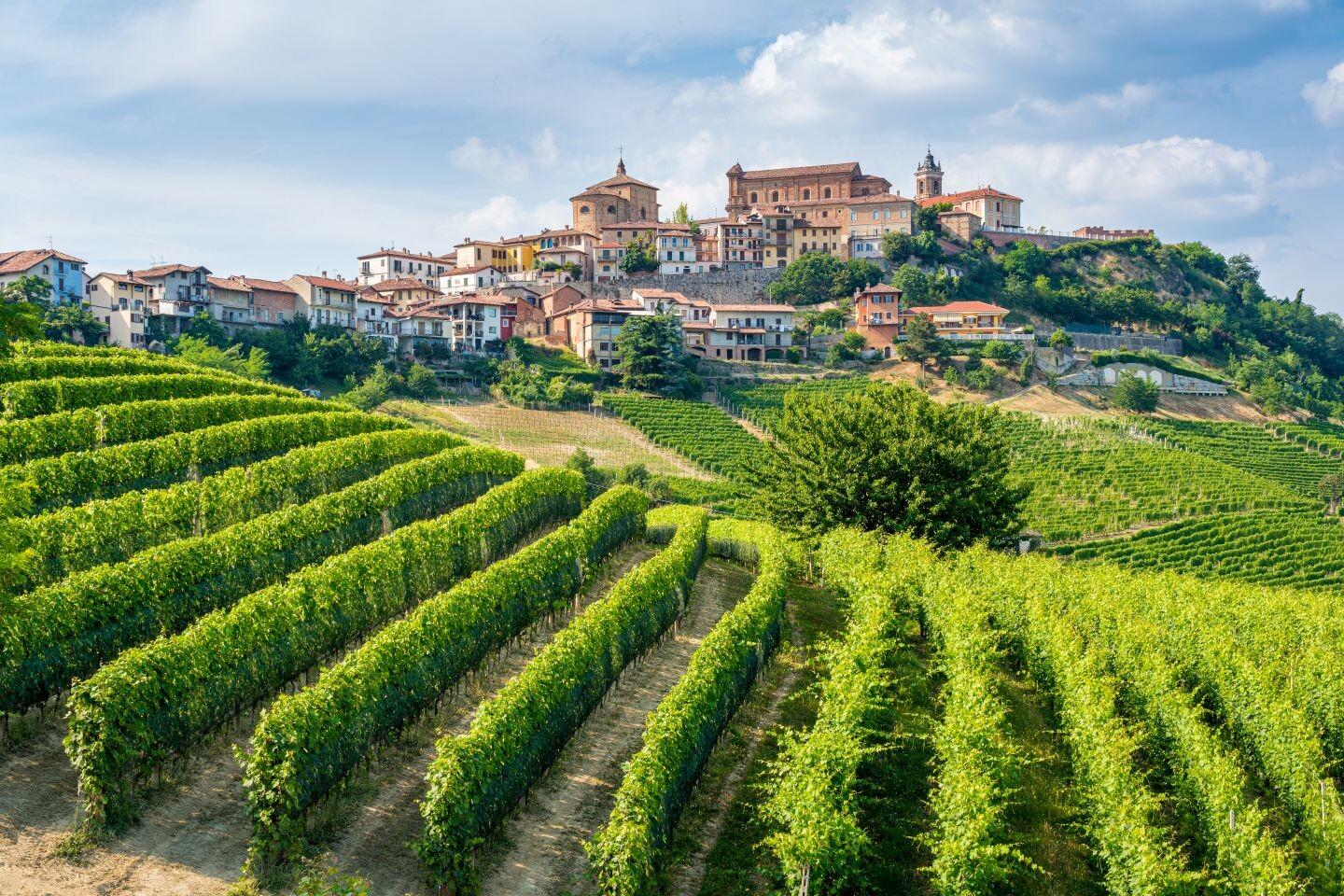
Piedmont beyond the famous names
Piedmont occupies an almost mythical place in Italian wine.
For many collectors, the conversation begins with Barolo and Barbaresco. Nebbiolo, with its perfume, formidable tannin and extraordinary capacity to age, quite rightly commands enormous respect.
But Piedmontese wine culture has never existed solely around bottles destined for decades in the cellar.
There are wines for Sunday lunch.
Wines for pasta.
Wines for salumi shared while dinner is still being prepared.
And Barbera has long belonged to this more immediate, generous side of Piedmont.
Its personality is quite different from Nebbiolo.
Where Nebbiolo can be pale, perfumed and firmly tannic, Barbera typically gives deeper colour, abundant fruit and notably fresh acidity, with tannins that are generally much softer.
The result is a red wine that can feel simultaneously generous and energetic.
That combination matters at the dinner table.

Acidity is what makes the wine work
Wine descriptions have a habit of making acidity sound rather technical.
It shouldn't.
Acidity is simply one of the reasons you find yourself reaching for another sip.
It provides freshness. It gives a wine shape. And when there is rich food on the table—braised meat, ragù, cheese, butter, olive oil—it helps prevent everything from becoming too heavy.
Barbera possesses this quality naturally.
A good example can offer black cherry, plum, red fruit and spice, sometimes with darker or more savoury notes depending on where it is grown and how it is matured.
But underneath that fruit is the freshness that gives Barbera its particular usefulness.
It is why a wine can feel generous beside a slow-cooked dish without becoming exhausting halfway through the bottle.
That is a very Italian kind of virtue.
The wine is not asking to be considered separately from the meal.
It is completing it.
Barbera d'Alba and Barbera d'Asti
Two names appear frequently when exploring Barbera: Barbera d'Alba and Barbera d'Asti.
Both come from Piedmont, but they offer slightly different perspectives on the variety.

Around Alba—territory also famous for Barolo and Barbaresco—Barbera often shares vineyard country with Nebbiolo. Producers known for serious Piedmontese wines frequently make Barbera alongside their more prestigious bottlings.
At Fontanabianca in Neive, for example, Barbera grows in the same broader landscape in which the family produces its Barbaresco wines. Their Barbera d'Alba Superiore is matured in oak and retains the lively acidity characteristic of the variety while carrying enough structure for richer food.
Elio Altare, another important Langhe producer, offers a Barbera d'Alba showing the darker-fruited, generous side of the grape—black cherry and violet alongside its characteristic freshness.
Move east toward Asti and Barbera becomes even more central to the landscape.
The Boggero ‘Fiore di Bosco’ Barbera d'Asti Superiore, for instance, is produced from Barbera grown at Vaglio Serra and matured using both Slavonian oak and French barriques. The producer describes dark berries, spice and a full, balanced palate, recommending it alongside meat, game and mature cheeses.
These are not wines trying to imitate Nebbiolo.That is precisely the point.
Barbera has its own place at the table.

The wine for a winter kitchen
Imagine a cold evening.
Something has been cooking for several hours.
Perhaps beef cheeks slowly braised in wine. Pappardelle with a deep mushroom ragù. Osso buco. Sausages with lentils. Roast pork. A piece of Parmigiano left on the table after dinner.
This is Barbera territory.
Its fruit meets the richness of the dish, while its acidity cuts through it.
Even something as simple as a good bowl of pasta with tomato and Parmigiano makes sense. Tomato itself brings acidity, and Barbera has the energy to meet it rather than disappear beside it.
This is one reason Italian wines can sometimes make more sense when tasted over dinner than they do in isolation.
They were never intended to exist alone.
Their edges soften beside food. Their freshness becomes purposeful. What may initially seem restrained suddenly feels perfectly proportioned.
Not every great bottle needs to be a grand bottle
There is another reason we have a particular affection for Barbera.
It reminds us that seriousness and pleasure are not the same thing.
The wine world naturally gravitates toward hierarchy: famous vineyards, celebrated appellations, scores, vintages and bottles destined for long cellaring.
These things matter.
But they can occasionally distract us from one of wine's simplest purposes.
Dinner.
A bottle opened because there is something good cooking.
Two glasses poured while everyone is still standing around the kitchen.
A second bottle opened because nobody is quite ready for the evening to end.
Barbera belongs beautifully to these moments.
It can certainly be complex. The best examples have depth, provenance and the ability to evolve.
But Barbera rarely demands ceremony.
And there is considerable sophistication in a wine that doesn't need ceremony to be good.
A winter invitation
Over the coming months, we will be exploring many of the red wines that make the colder season particularly enjoyable—from the hills of Piedmont and Tuscany to Burgundy, Bordeaux and some exceptional Australian vineyards.
But Barbera seems an appropriate place to begin.
It represents much of what we admire about Italian wine: regional identity, an instinctive relationship with food, and the understanding that a bottle does not need to be imposing to be memorable.
Sometimes the right wine is simply the one that makes dinner better.
This winter, we suggest putting Barbera on the table.
Explore Barbera and the wines of Piedmont at Bricchi & Barrett.